Finding Inner Peace by the Ocean: Why Coastal Yoga Deepens Your Practice
The first time you unroll a yoga mat on sand, everything feels unfamiliar. The ground shifts, the ocean roars, the wind tugs at your clothes. And then, after a few breaths, something inside you softens. Your practice becomes less about precision and more about presence. That is the quiet power of coastal yoga.
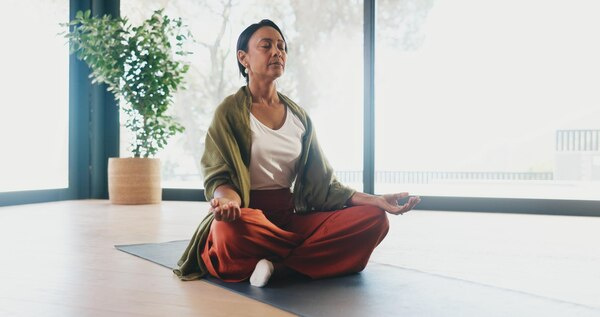
The Ocean as a Natural Teacher
Yoga is fundamentally about union: of breath and body, of awareness and experience, of self and the world around you. Practicing by the ocean makes that union almost unavoidable.
1. Cycles of the Waves and the Rhythm of Breath
The rhythm of the sea mirrors the rhythm of pranayama:
- Inhale: the wave gathers, swells, approaches.
- Pause: a brief suspended stillness before it breaks.
- Exhale: the water rolls back, dissolving into foam and silence.
When you practice near the water, your breath naturally begins to sync with this cycle. Without forcing anything, you start to:
- Lengthen your inhales and exhales to match the rolling surf
- Use the sound of waves as a focal point for concentration
- Let outer rhythm guide inner stillness
This alignment deepens practices like ujjayi breathing; it becomes less a technique and more a conversation between your lungs and the sea.
2. Impermanence in Real Time
Yoga philosophy talks about change, impermanence, and non-attachment. The ocean shows those teachings in motion:
- Waves form and dissolve in seconds
- Tidal lines redraw the shoreline throughout the day
- Footprints, even deep ones, vanish in minutes
As you move through asanas, you’re constantly reminded that nothing—no posture, no sensation, no thought—lasts. This can:
- Make it easier to release judgment about “perfect” alignment
- Encourage you to notice each moment without clinging to it
- Support letting go of mental stories as easily as the sea erases footprints
The ocean doesn’t hold on to what passes through it. Practicing beside it helps you learn to do the same.
Engaging the Senses to Anchor the Mind
One challenge of indoor practice is mental distraction: screens, schedules, and to-do lists follow you onto the mat. By the ocean, sensory experience becomes so rich that it can override mental noise.
3. Sound as Moving Meditation
The steady crash of waves offers a natural sound bath:
- White noise that drowns out intrusive thoughts
- A constant, predictable rhythm that calms the nervous system
- A non-verbal mantra that you can mentally “chant” along with
Instead of fighting your thoughts, you can let them float on top of the sound, gradually losing their grip.
4. Touch, Temperature, and Texture
Sand, wind, sunlight, and salt air create a multi-layered tactile experience:
- Sand under the feet builds proprioception; you feel micro-adjustments in every pose
- The breeze against your skin keeps you tuned in to subtle shifts in the body
- The warmth or coolness of the air draws attention back to physical sensation
All of this pulls awareness out of the head and into the body, which is the essence of embodied practice.
5. Visual Space and Inner Space
Open horizons matter. Indoors, your gaze often falls on walls, mirrors, or ceilings. By the water:
- Your drishti can rest on a wide, uncluttered horizon
- The sky and sea create a sense of spaciousness that seeps inward
- You feel small but not insignificant, part of a much greater whole
This visual spaciousness encourages mental spaciousness—thoughts have room to arise and dissolve without dominating you.
Challenging the Body to Liberate the Mind
Coastal yoga doesn’t just feel poetic; it is physically different. These changes, while sometimes uncomfortable, deepen practice in important ways.
6. Uneven Ground Builds Subtle Strength
Sand is unstable, so every pose demands more engagement:
- Standing balances require deep recruitment of the ankles, feet, and core
- Even simple lunges wake up stabilizing muscles that stay lazy on solid floors
- Falling out of a pose becomes softer and less intimidating
Instead of chasing aesthetic perfection, you learn to prioritize inner steadiness over outer symmetry. That shift alone can transform your relationship to yoga.
7. Letting Go of Control
You cannot control the wind, the sound of gulls, the changing light, or the texture of the sand. This can be frustrating—or freeing.
Coastal practice invites you to:
- Release the need for a perfectly quiet, perfectly controlled environment
- Accept distraction as part of practice instead of a failure of it
- Adapt to what is present in each moment, which is at the heart of yoga
The more you surrender the desire to manage every detail, the more you experience true inner peace: calmness in the midst of movement and noise.
Nervous System Soothing: Science Behind the Serenity
The peace you feel near the water is not just romantic imagery; it has physiological roots.
8. Blue Space and Mental Health
Studies show that “blue spaces” (oceans, lakes, rivers) are linked to:
- Reduced stress and anxiety
- Improved mood and emotional regulation
- Enhanced cognitive function and creativity
Combining yoga—which already down-regulates the stress response—with time by the water compounds these effects. Your practice becomes not just exercise, but a potent form of nervous system therapy.
9. Breath, Ions, and the Air You Inhale
Sea air is often:
- Cooler and cleaner than urban indoor air
- Rich in negative ions associated with improved serotonin regulation and feelings of well-being
- Slightly moist and saline, which can feel soothing for the respiratory system
This can make breathwork feel easier, deeper, and more nourishing, supporting the pranayama aspect of your practice in a very tangible way.
Spiritual Depth: Remembering Your Place in the Whole
For many practitioners, coastal yoga opens a door beyond physical poses and stress relief.
10. A Living Metaphor for Consciousness
The ocean has long been a metaphor in spiritual traditions:
- Waves = individual thoughts and experiences
- Ocean = underlying awareness or consciousness
Meditating by the shore while listening to waves can make this metaphor come alive. You start to sense:
- Thoughts rising and falling like waves
- A deeper stillness beneath the surface activity
- A feeling that you, too, are part of something vast and continuous
This isn’t about adopting any specific belief system. It’s about directly experiencing a sense of connection that goes beyond the ego’s small story.
11. Humility and Awe
Standing at the edge of an ocean naturally evokes awe. Yoga philosophy encourages humility, not in a self-negating way, but as a recognition that:
- You are both tiny and utterly included in a much larger existence
- Your problems matter, but they are not the whole reality
- There is wisdom in forces you cannot control or fully understand
These realizations soften inner tension, making true surrender (ishvara pranidhana) more accessible than in a familiar studio room.
Practical Ways to Deepen Your Coastal Practice
To get the most from yoga by the ocean, small intentional choices make a big difference.
12. Choose Time and Space Thoughtfully
- Early morning or just before sunset usually offers calmer energy and softer light
- Find a quieter stretch of shore if possible, away from crowds and loud music
- Notice the tide schedule for safety and space
A slightly more secluded spot supports introspection and uninterrupted flow.
13. Adapt Your Practice to the Elements
- Focus on grounding postures: Warrior poses, wide-legged forward folds, Malasana, and gentle backbends
- Use the sand: let your hands and feet sink in to feel added resistance and support
- Accept imperfection: wobbles, crooked lines, and sandy palms are part of the practice, not problems to fix
Think of your sequence as a dialogue with your surroundings rather than a rigid agenda.
14. Build in Stillness
Don’t rush off the beach as soon as your final asana ends:
- Extend savasana: lie back, feel the sand supporting you, listen fully to the waves
- Sit in simple meditation, eyes half-closed, and let your attention rest on sound and breath
- Reflect briefly afterward: 2–3 sentences in a journal or mental note of how the ocean shifted your state
This seals the experience into your nervous system and makes the sense of inner peace easier to recall later, even far from the shore.
Carrying the Ocean Home
The deepest gift of coastal yoga is not limited to the beach itself. Over time, you learn to:
- Hear an “inner wave”—a steady rhythm of breath—even in city noise
- Remember the feeling of vastness and use it when daily life feels narrow
- Recreate the sensory anchors (soundtracks of waves, open windows, blue colors) to support inner calm anywhere
You are not meant to live permanently on a shoreline to stay connected to that peace. The ocean becomes a teacher whose lessons you can revisit every time you step onto your mat, wherever you are.
In the end, coastal yoga deepens your practice because it strips away the illusion that peace comes from control. Instead, it shows you that genuine stillness arises when you can stand at the edge of something wild and powerful, breathe with it, and know that you belong.